On 13 September 1929, Jatindranath Das died in Lahore Borstal Jail after 63 days on hunger strike. Das, Bhagat Singh, Batukeshwar Dutt and other revolutionaries imprisoned in the Lahore Conspiracy Case had been demanding humane treatment and recognition of the distinct conditions of political prisoners: adequate food and clothing, books and newspapers, writing materials, sanitation, and an end to degrading prison labour and discriminatory treatment. Das was twenty-four. His death travelled far beyond the walls of the jail: his body was taken from Lahore to Calcutta by train and enormous crowds gathered along the route and at his funeral.
Seven years later, Jawaharlal Nehru called on Congress committees and Congress members across India to observe 13 September, the anniversary of Das’s death, as Political Prisoners’ Day. His 1936 statement explicitly linked the day to prisoners held in jails, detention camps and the Andamans, and to demands for books, newspapers, writing materials, contact with families and an end to solitary confinement. The date therefore has a documented anti-colonial history as a day for remembering people imprisoned because of political struggle and for contesting the conditions under which the state confines them.
Umar Khalid was arrested on 13 September 2020. He remains in pre-trial detention under the Unlawful Activities (Prevention) Act in the Delhi riots conspiracy case. Khalid denies the allegations against him; in January 2026 the Supreme Court declined to grant him bail, while granting bail to five co-accused, and his trial has still not concluded. The coincidence of dates has made 13 September both the historical anniversary of Jatin Das’s death and, for Khalid’s supporters, an annual marker of his imprisonment.
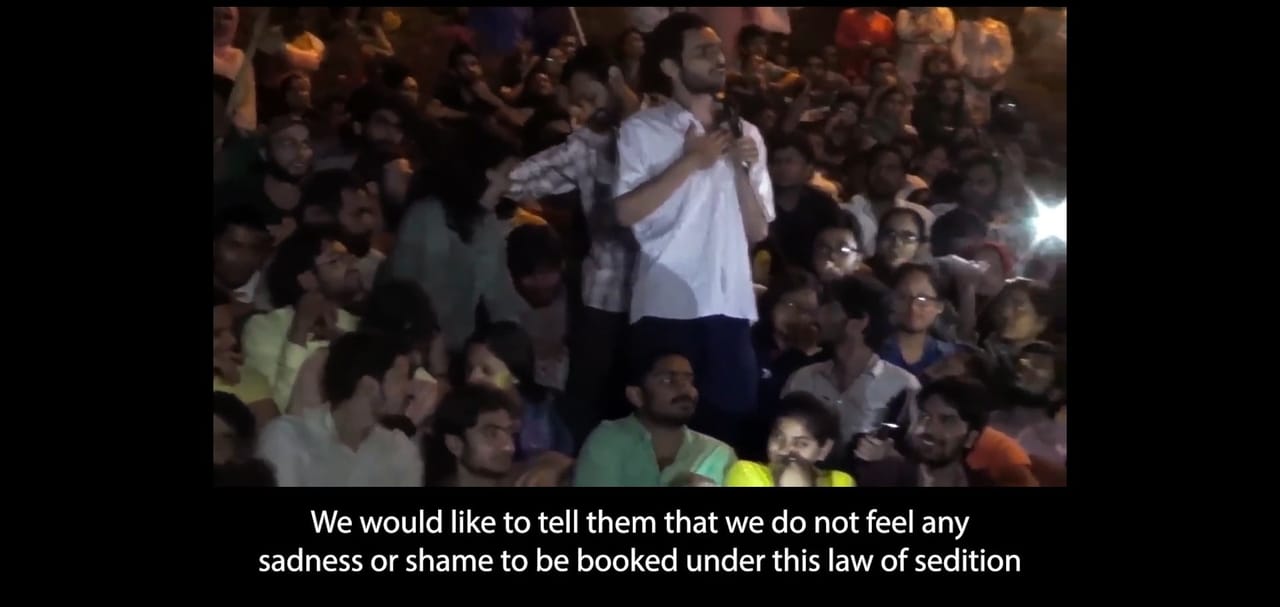
Lalit Vachani’s documentary Prisoner No. 626710 Is Present follows the political and media history that preceded Khalid’s arrest through archival footage, speeches and testimony from people close to him. Since its 2024 premiere it has circulated through universities, film societies, independent cultural spaces and civil-liberties networks. The film’s own screening archive records more than sixty offline screenings and discussions organised around September 2024 alone, including campus screenings and coordinated programmes across multiple Indian cities and towns.
In September 2026, a planned screening at NLSIU Bengaluru was postponed amid security concerns and opposition from the ABVP. Days later, the Central Board of Film Certification publicly flagged a proposed screening at IIIT Hyderabad, saying public exhibition of an uncertified documentary would violate the Cinematograph Act unless an exemption had been obtained; IIIT-H subsequently cancelled the event. The Film and Television Institute of India Students’ Association publicly criticised the intervention as an intrusion into academic and cultural space. A documentary about prolonged incarceration is now also provoking arguments about who may show political cinema, where it may be shown, and what kinds of discussion universities are prepared to host.
The film also lands in a region where other high-profile detentions are being challenged by rights groups. In Pakistan, Amnesty International is campaigning over the continued detention of former parliamentarian Ali Wazir and Baloch organiser Mahrang Baloch; human-rights lawyers Imaan Mazari-Hazir and Hadi Ali Chattha were re-arrested on 17 September, only hours after the Supreme Court suspended their sentences and granted bail. Former university lecturer Junaid Hafeez has meanwhile spent more than thirteen years in prison after being arrested on blasphemy allegations in 2013 and sentenced to death in 2019; his appeal has been pending since 2020 and has repeatedly been deferred without a substantive hearing.
Those arguments are also travelling through diaspora networks. Organisers in Britain have announced actions for 26 September in London, Manchester, Birmingham and Sheffield around Ajay Kumar Singhal, Vishal Singh and Priyanshu Kashyap, who are imprisoned in the NIA's Lucknow Conspiracy Case. The NIA alleges that the case concerns efforts to revive the banned CPI (Maoist) in northern India; solidarity groups dispute that framing and describe the case as repression of activists.
That is why the most useful way to encounter "Prisoner No. 626710 Is Present" is collectively. Watch it with friends. Screen it in a classroom, reading group, union branch, community space, film club or student society where lawful and possible. Read the case alongside the film. Discuss pre-trial detention, anti-terror legislation, prison conditions, censorship, media framing and the different legal standards that states invoke when they call dissent a security threat. It can open a much larger conversation about the past and present of imprisonment, dissent and civil liberties across South Asia.
Watch / screen / follow
Official film site: prisoner626710.com
Email to ask for screening material: prisoner626710@gmail.com
Screening archive and organising examples: Screenings
Use the film-makers’ official pages for authorised viewing or screening information. If you are organising a public event, check the applicable venue and exhibition rules in your jurisdiction.
Free all political prisoners everywhere
The demand is larger than any one documentary, one party, one ideology or one state. It means opposing indefinite and punitive pre-trial detention; opposing disappearance and detention without charge; defending due process and access to counsel; resisting the use of anti-terror, national-security, blasphemy and public-order laws to punish protected speech and peaceful organising; and insisting that allegations of actual crimes be tested through fair, timely and public proceedings rather than years of incarceration before judgment.
Free Umar Khalid
Free Sharjeel Imam
Free Ajay Kumar Singhal
Free Vishal Singh
Free Priyanshu Kashyap
Free Imaan Mazari-Hazir
Free Hadi Ali Chattha
Free Ali Wazir
Free Junaid Hafeez
Free Mahrang Baloch
Free Bebarg Zehri
Free Beebow Baloch
Free Shah Jee Sibghat Ullah
Free Gulzadi Baloch